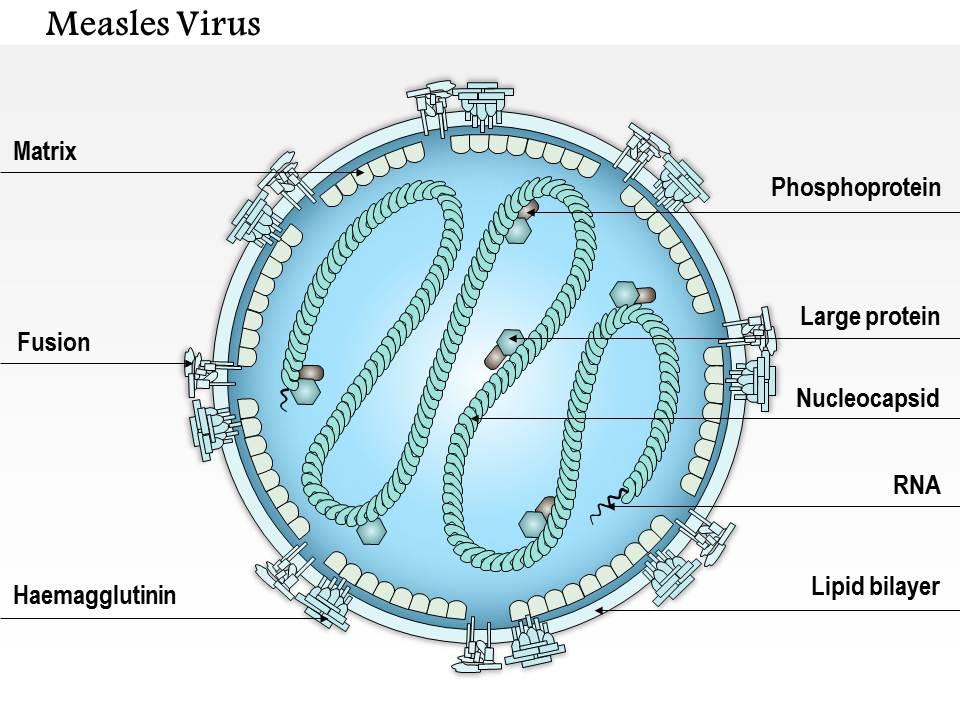
 Measles is a preventable, highly contagious, acute febrile viral illness that is commonly experienced in childhood – especially in the prevaccination era. The causative agent of the disease is Measles virus which belongs in the genus Morbillivirus in the Paramyxoviridae family, and it is a single stranded negative sense RNA virus [1]. Characteristic symptoms of the disease include “maculopapular rash, fever, and at least one of cough, coryza [runny/stuff nose and nasal inflammation], or conjunctivitis [inflammation of the membrane covering the eye and inner eyelids]” [2].
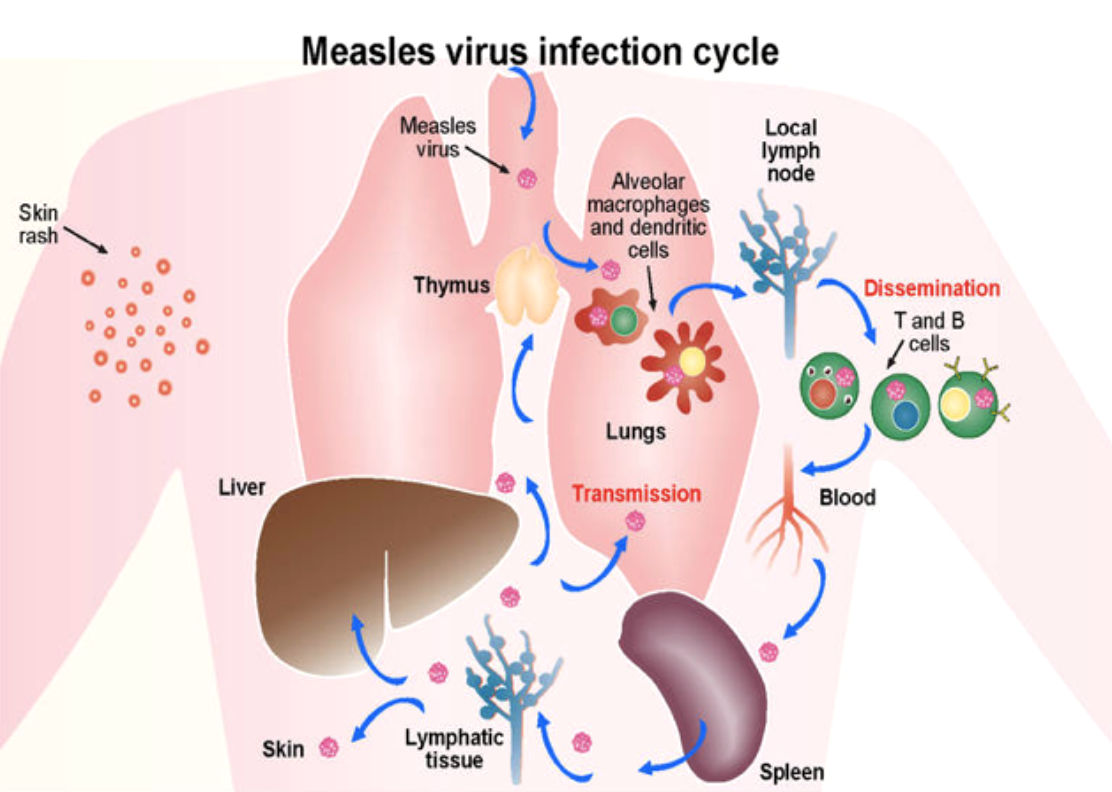
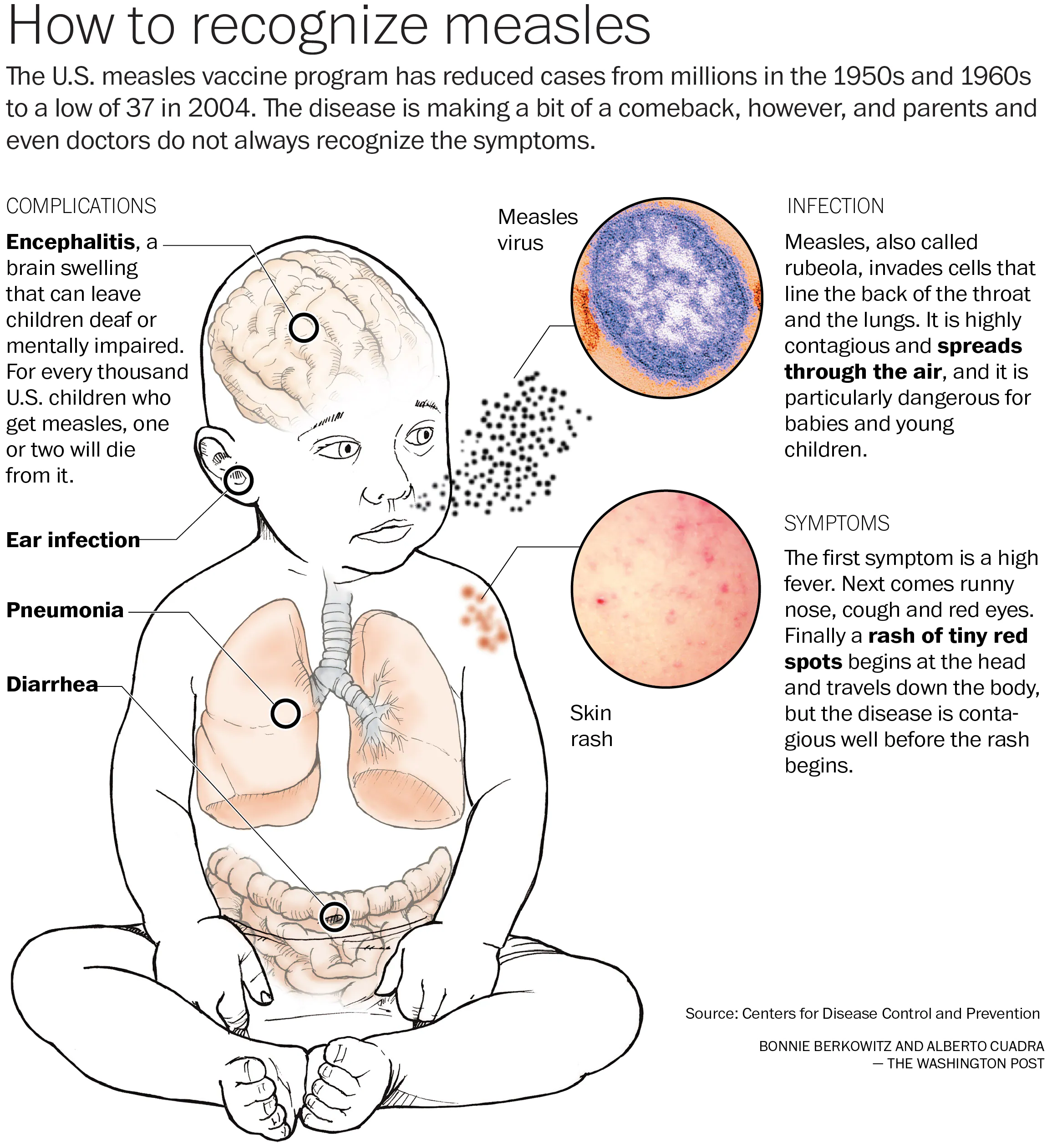 Despite this seemingly innocuous first glance at measles, it is quite a harmful disease being responsible for an estimated “more than 4 million deaths in the prevaccination era”, and it continues to be “an important cause of global mortality and morbidity, particularly in Africa and Southeast Asia, and accounts for about 100,000 deaths annually despite the availability of an effective vaccine” [3]. As the disease initially infects respiratory lymphocytes, dendritic cells, and alveolar macrophages – all white blood cells – it has the ability to suppress host immunity through the expression of certain proteins. This can lead to a myriad of secondary infections which create more complications for the individual infected. Alongside this, it is believed to cause ‘immune amnesia’ as the infection causes measles-specific lymphocytes to proliferate, replacing prior memory cells, meaning that one’s acquired immunity is stripped away from them.
 The most common complication of measles is pneumonia caused either by the virus or a secondary infection. Other complications may include croup, otitis media, diarrhea, myocarditis, pericarditis, appendicitis, and thrombocytopenic purpura. There are also severe complications with the brain that can result from measles. Around 1 in 1,000 children will develop a life-threatening encephalitis early on, and an additional 5 to 10 in 100,000 will develop subacute sclerosing panencephalitis – potentially resulting in blindness and hearing loss – which develops several months to years after a measles infection. In pregnant women, complications include maternal death, miscarriage, intrauterine fetal death, and low birth-weight infants [4].
Overall, a measles infection carries quite a high risk especially when one considers complications are most commonly observed in those who are less than 5 years old and greater than 20 years old – a vast subset of the population [5]. Measles is not a disease one should take lightly. Luckily, however, there is a common, preventative treatment for the disease in the form of a safe vaccine which will be explored further in the next section.
- Noah Kondamudi et al., “Measles”, in StatPearls (StatPearls Publishing, 2025), http://www.ncbi.nlm.nih.gov/books/NBK448068/.
- Judith Hubschen et al., “Measles”, The Lancet 399, no.10325 (2022): 682, https://doi.org/10.1016/S0140-6736(21)02004-3.
- Hubschen et al., “Measles”, 680; Noah Kondamudi et al., “Measles”, in StatPearls (StatPearls Publishing, 2025), http://www.ncbi.nlm.nih.gov/books/NBK448068/.
- Konndamudi et al., “Measles”.
- Judith Hubschen et al., “Measles”, The Lancet 399, no.10325 (2022): 684, https://doi.org/10.1016/S0140-6736(21)02004-3.